


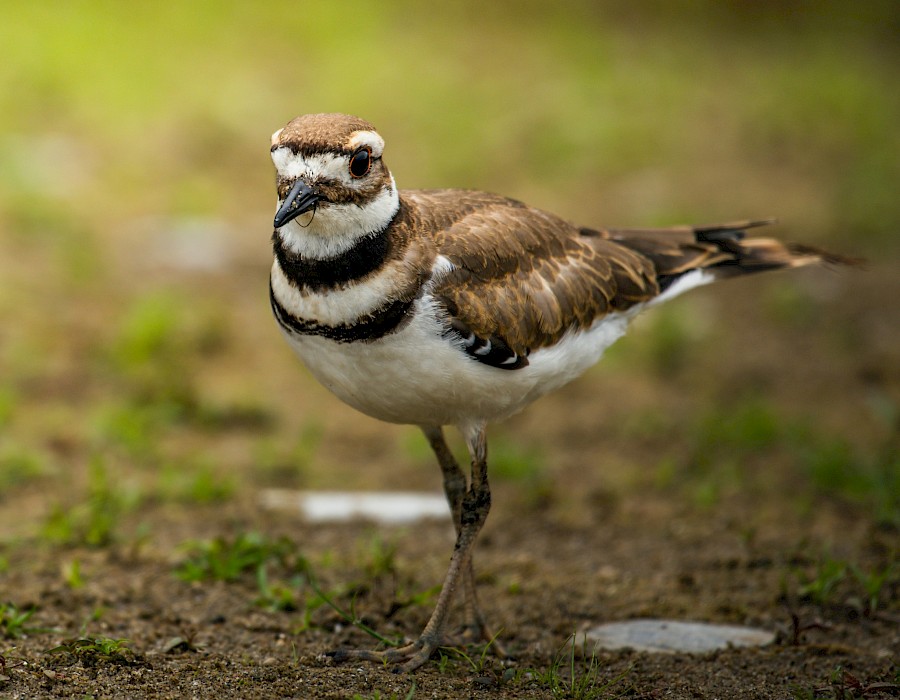
On May 1, during work to reconstruct the P-113 Bridge and rehabilitate the approaches to the Melocheville Tunnel, our teams made an unexpected discovery: a killdeer nest on the worksite.
We immediately called on wild bird experts to confirm the species identification and to help determine the correct response. Falcon Environmental visited the site to assess the situation and develop recommendations.
Wildlife protection measures
Following best practices in wildlife protection, a safety perimeter was established around the nest to limit disturbances and ensure the birds were left in peace during the critical nesting period. On May 11, Falcon Environmental conducted a follow-up visit and confirmed that the eggs had hatched. Although this meant that regulations no longer required a safety perimeter around the nest, the contractor was asked to continue keeping a close eye out for the birds, especially when moving machinery. After hatching, the chicks left the site with their parents to reach a nearby body of water. Because the killdeer has a short nesting period and its young become independent very quickly, the nest has now been abandoned. This is why a safety perimeter is not currently required.
The measures taken to protect these birds reflect JCCBI’s ongoing commitment to biodiversity protection. It also highlights how close collaboration between field teams, specialists and partner organizations makes it possible to integrate responsible practices into our day-to-day worksite operations.
Did you know?
The killdeer (Charadrius vociferus) nests directly on the ground, where its eggs blend in with the gravel. To protect their young, adults will pretend to have a broken wing and lure predators away.
In Canada, nesting killdeer are protected under the Migratory Birds Convention Act, 1994.
Latest news
Héritage Champlain Pathway:…
From the nest box to first…

JCCBI employer brand: Very…
