


Another way to cross the St. Lawrence River
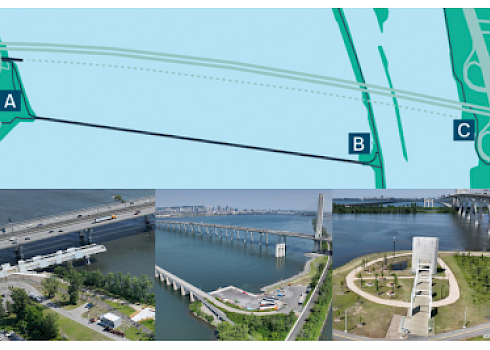
Looking to rediscover the St. Lawrence River from a new perspective? The Champlain Legacy Trail invites you to explore three distinct sectors—Nuns’ Island, the St. Lawrence Seaway Dike and Brossard—where active transportation, nature, history and breathtaking views come together.
An Experience Along the River
Developed on more than seven hectares of freed up land following the deconstruction of the original Champlain Bridge, the Héritage Champlain Pathway can be explored on foot or by bicycle. Discover riverside pathways, relax in thoughtfully designed rest areas and take in unique views of the St. Lawrence River, the Samuel De Champlain Bridge and downtown Montréal. Along the way, explore the site’s rich history through preserved remnants of the original Champlain Bridge and interpretive panels that highlight the area’s heritage, biodiversity and evolution.
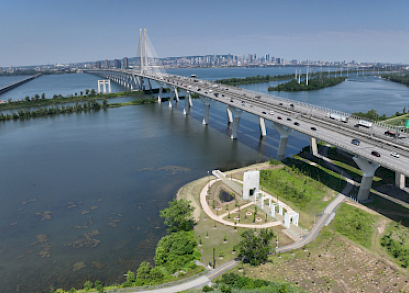
Rediscover the River from a New Perspective
Explore the Héritage Champlain Pathway on foot or by bike
Île des Sœurs Sector
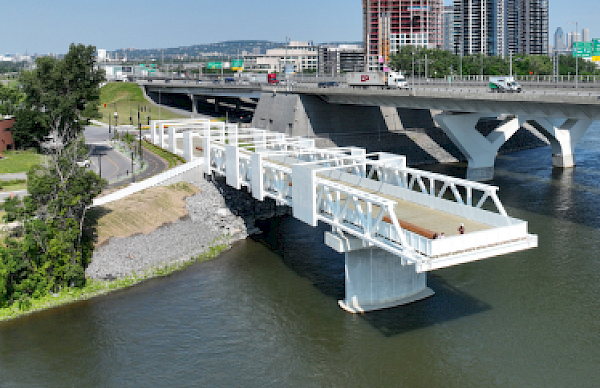
The Île des Sœurs sector is an ideal gateway to the Héritage Champlain Pathway. Visitors will find accessible pathways, relaxation areas, and a lookout offering stunning views of the St. Lawrence River and the Samuel De Champlain Bridge. Several remnants of the original Champlain Bridge have also been incorporated into the site, helping preserve and showcase its history.
Estacade Crossing
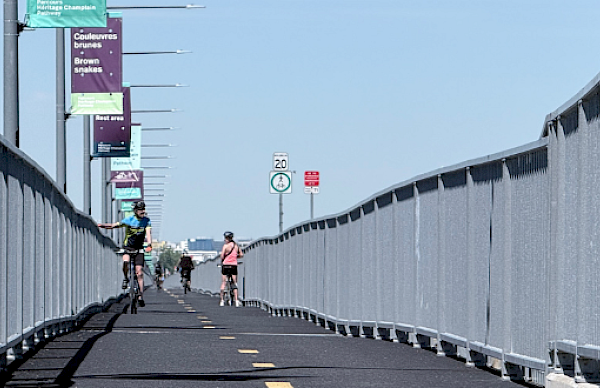
Open to pedestrians and cyclists, the Estacade offers a unique experience in the heart of the river. This crossing provides exceptional views of Montréal, the St. Lawrence River, and the surrounding area. Nature enthusiasts can also observe a variety of bird species that use the river’s migratory corridor, as well as installations designed to support cliff swallow nesting.
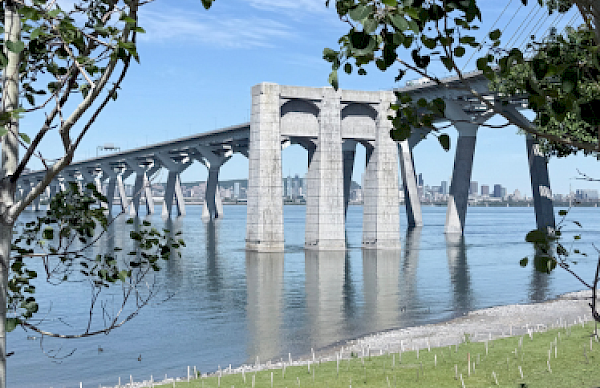
Dike Sector
The Dike sector stands out for its spectacular views of downtown Montréal and the Samuel De Champlain Bridge. A monumental pier preserved from the original Champlain Bridge highlights the site’s historical significance, while the landscaping showcases the river and its surrounding natural environments.
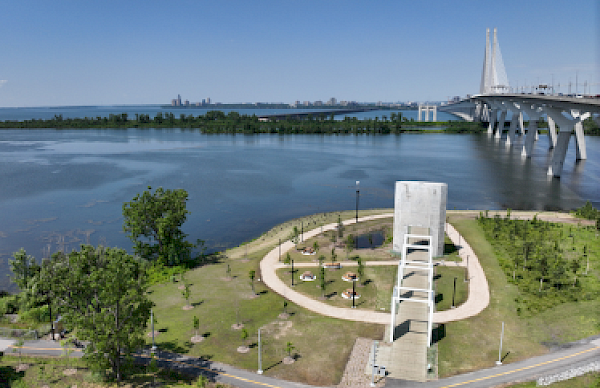
Brossard Sector
The Brossard sector offers visitors an opportunity to connect with the river through green spaces, pathways, and rest areas. Visitors can discover a preserved pier from the original Champlain Bridge, along with connections to La Riveraine multi-use path, promoting active transportation and exploration of the riverbanks.
An Invitation to Explore
Whether you are looking for a family outing, a cycling excursion, a moment of quiet reflection, or an opportunity to observe local wildlife, the Héritage Champlain Pathway offers new ways to experience the St. Lawrence River and discover the legacy of the original Champlain Bridge in an accessible and inspiring setting.
9 little-known things to experience when crossing the Jacques Cartier Bridge
Did you know that, every year, about 700 000 pedestrians and cyclists use the Jacques Cartier Bridge multipurpose path and sidewalk, a 2.7-km active transportation corridor, to get between Longueuil and Montreal over the St. Lawrence River?
Multipurpose path and sidewalk
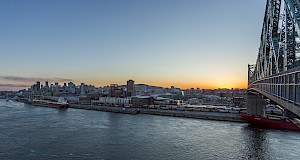
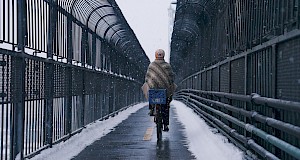
The multipurpose path is located on the upstream side of the Jacques Cartier Bridge. It provides a spectacular view that includes downtown Montreal, Mount Royal and the Old Port. Located on the downstream side of the Jacques Cartier Bridge, the sidewalk offers an impressive view of La Ronde, the Olympic Park, and Montreal’s east end.
1. Architecture
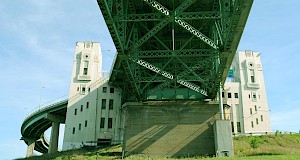
Admire the four turrets of the Île Sainte-Hélène pavilion, located halfway between Montreal and the South Shore. They are part of this Art-Deco-style building built between 1927 and 1931.
2. Social and Urban Contributor
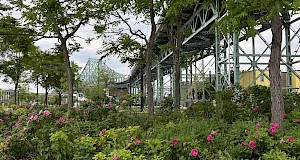
Go under the bridge to enjoy an urban trail, an active mobility path, and beautiful vegetation in the sector while learning about key facts from the information plinths.
3. Viewpoint
Take a break on this unique and challenging active transportation path by stopping at the Jacques Cartier Bridge lookout for an exceptional view of the city.

4. Art
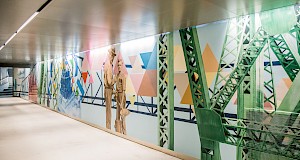
Admire two murals by Montreal artist Rafael Sottolichio that makes crossing through the pedestrian tunnel in the Île Sainte-Hélène pavilion seem like a journey through a bygone era, when the city hummed to the sound of massive development projects. The tunel is closed for 2026 due to construction work at the île Sainte-Hélène Pavilon
5. Innovation
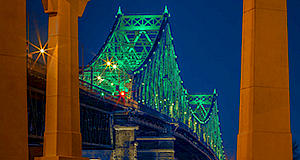
Enjoy the visual experience and unique living connectivity of the Jacques Cartier Bridge illumination, a dynamic light show from dusk to dawn that is activated in real time by the seasons and the energy of the city.
6. Sustainable Development
Listen to the calls or watch the flight of young and older falcons living in the nesting boxes that help protect biodiversity near our infrastructure.
7. History
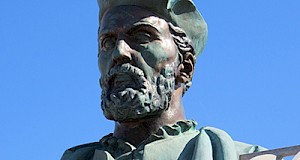
The bronze bust of Jacques Cartier, currently undergoing restoration until the end of 2026, was donated by the French government in June 1934 to celebrate the 400th anniversary of this great explorer’s first voyage to Canada.
8. Safety
This urban bridge has an atypical geometry with steep and long slopes and is exposed to particular weather conditions. Follow the Highway Safety Code to stay safe on the path and sidewalk in both summer and winter.
9. Historical Legacy
Take the Stories and Bridges tour available with the Montréal en Histoires app. Download the content for free and depending on where you start and how fast you go-do a 30-or-60-minute bike tour at your own pace.

Stories and Bridges digital historical circuit
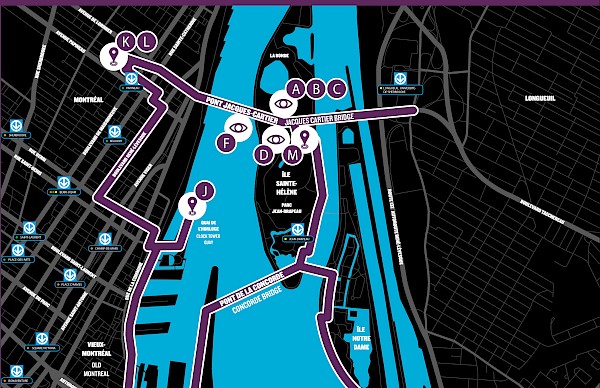
The Stories and Bridges digital historical circuit, which can be done on foot or by bike, connects the Jacques Cartier Bridge, the original Champlain Bridge (whose deconstruction was completed in 2023), and the Estacade via the Greater Montreal cycling network.
These bridges have played a significant role in Montreal’s history and development.
For Canada’s 150th anniversary, JCCBI created a heritage experience that shows how our transportation infrastructure has helped build the communities of yesterday and today.
JCCBI contributed to the city’s festivities and cultural offerings with a digital historical circuit developed in collaboration with Montréal en Histoires.
Download the free app and get the experience today.

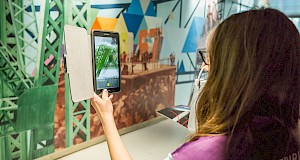
6 augmented realities
Thanks to immersive videos, these augmented realities bring alive historical
facts, anecdotes and animated characters against a historical backdrop.
A - B - C | La Traversée mural brings history to life in the pedestrian tunnel of the Île Sainte-Hélène pavilion at the Jacques Cartier Bridge: the workers, La Ronde and the girders.
D | The Ice Bridge: Before our current bridges were built, a three-kilometre train track crossed the St. Lawrence River in 1880.
E | The Champlain Bridge (whose deconstruction was completed in 2023): Spectacular images of the bridge construction from 1957 to 1962.
F | The three bridges, from their construction to today.

7 points of interest
Through seven points of interest and four augmented realities, discover the
people, places and events that have forged Montreal’s history. These sites feature
educational audiovisual material that includes texts, images and illustrations.
G | St. Lawrence Seaway: One of North America’s largest construction projects of the 20th century.
H | The Estacade: Its role from yesterday to today.
I | Environmental protection: Maintaining balance for plants and wildlife.
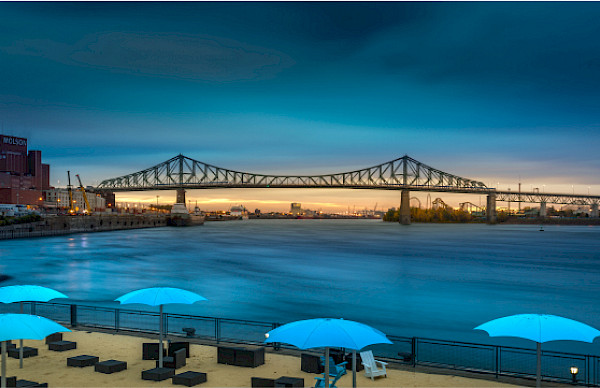
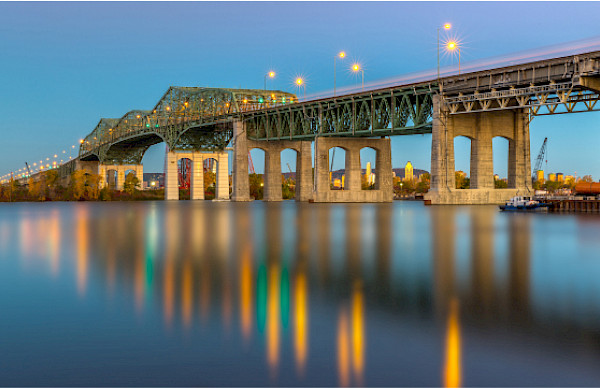
J | The Jacques Cartier Bridge: Its construction from 1925 to 1930.
K | The “crooked” bridge: The creative engineering behind the bridge’s configuration with three different angles.
L | The Jacques Cartier Bridge in Art: This architectural icon of the Montreal landscape has inspired artists.
M | Île Sainte-Hélène Pavilion: This mysterious art-deco-style building hides a secret passage under the Jacques Cartier Bridge.
