


Period : 1985 - 1999
Pavement debonding on the orthotropic deck
BackIn July 1995, significant issues were identified with pavement debonding on the Champlain Bridge’s new orthotropic deck.
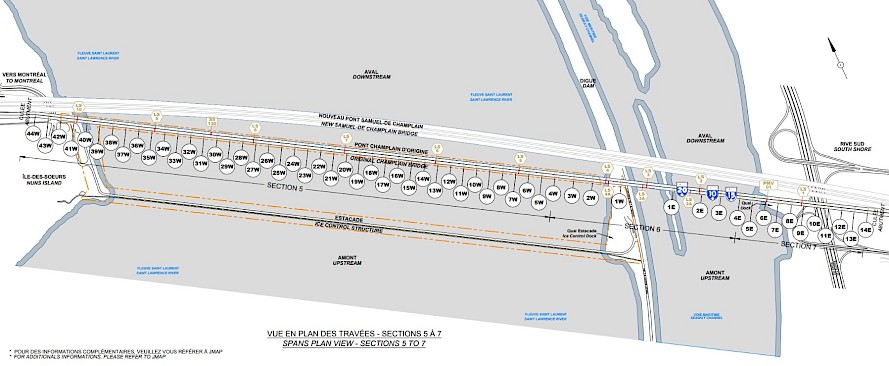
Reference map of the original Champlain Bridge to clearly locate the different sections and piers.
A report prepared by the SLSA in March 1991 noted that the problem had become apparent as soon as work began on replacing the deck.
According to the report, 18 of the 258 orthotropic deck panels had been installed by October 1991. By early November, adhesion defects in the epoxy tack coat had begun to affect these newly installed panels. Bonding failures were constantly appearing in new areas.
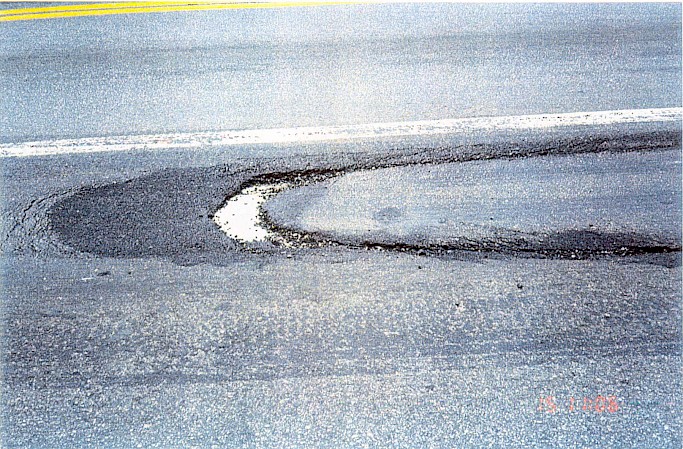
Credit: JCCBI
Shoving of the asphalt overlay due to bonding problems on the steel plate of the orthotropic deck during hot and sunny days.
The epoxy asphalt coating system had been supplied by Adhesive Engineering and installed by Quickway Lockweld. The report provided information on the type of product used, as well as on potential alternatives.
A water jet technique to cool the pavement
While decisions were being made on a permanent solution to the debonding problem, a water jet cooling technique was used to control the pavement’s surface temperature and maintain its adhesion to the metal deck on hot days.
A 2,000-gallon water truck equipped with two sprinklers was deployed whenever the pavement temperature reached 38°C.
A pavement debonding solution
Once the issues with pavement debonding on the new orthotropic deck had been identified, a large number of studies, pilot projects and construction contracts were carried out between 1996 and 2002 to find solutions to the problem.
