


Period : 2015 - 2025
The construction of the river giant
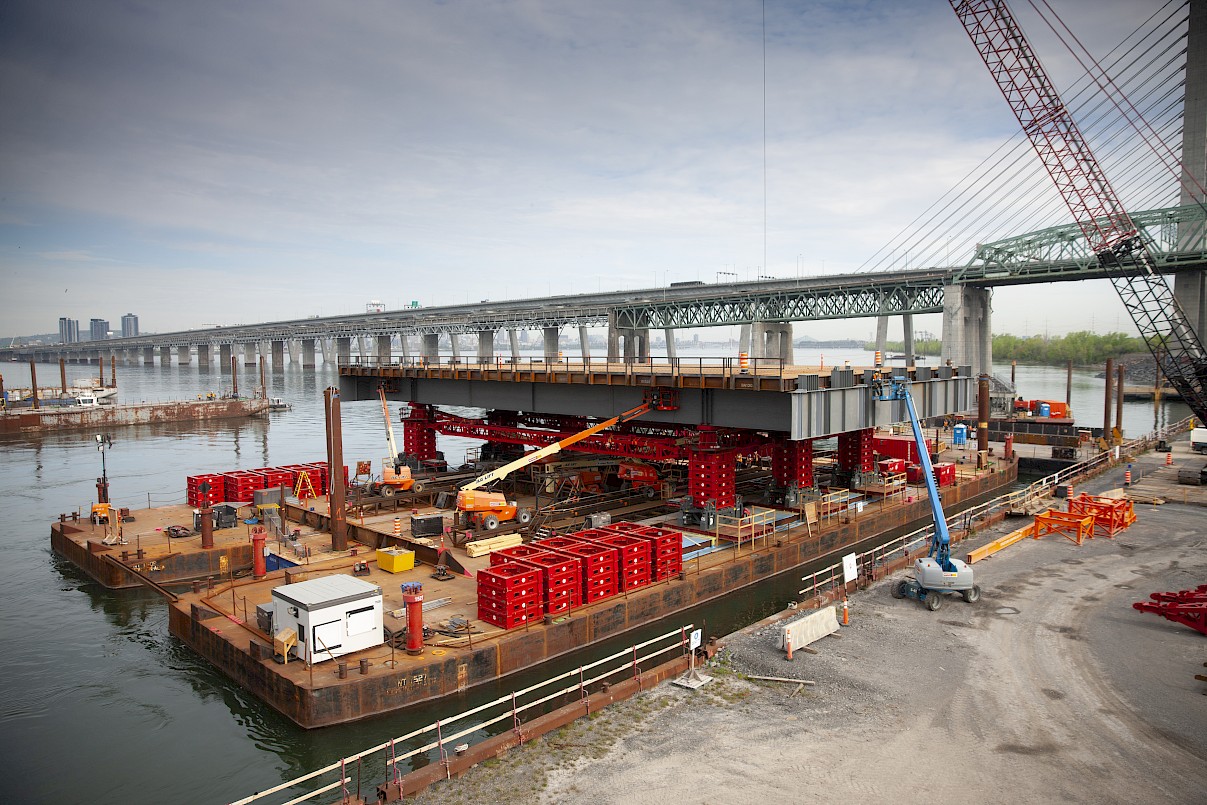
BackIn winter 2021, to deconstruct the 30 spans of the original Champlain Bridge over the St. Lawrence River, NHSL and its engineering partners developed a unique piece of equipment that includes a catamaran barge 76 m long by 40 m wide, or an area equivalent to two National Hockey League (NHL) hockey rinks! What a giant!
Upon arrival at the construction site, this catamaran barge was equipped with a system of six lifting towers, allowing the work platform to reach the height of a 9-story building and capable of supporting up to 4,800 tons. On average, the deconstruction cycle for a span, from its recovery by the lifting system to its deconstruction on the platform, ending with the removal of waste by barge, took around ten days.
Added to this remarkable machine were a dozen hydraulic systems designed to frequently move huge components, with loads of over 30,000 pounds or over 13,000 kilos.
 Credit: JCCBI
Construction of the river giant.
The use of 4D technology made it possible to design, model, and position each part to simulate the movements, verify the set-up and operation of the system of this catamaran barge. In addition to conducting "standard" structural and stability studies for the barge, NHSL also had to factor the river currents into its modelling.
Migration corridors welcome their first aquatic visitors
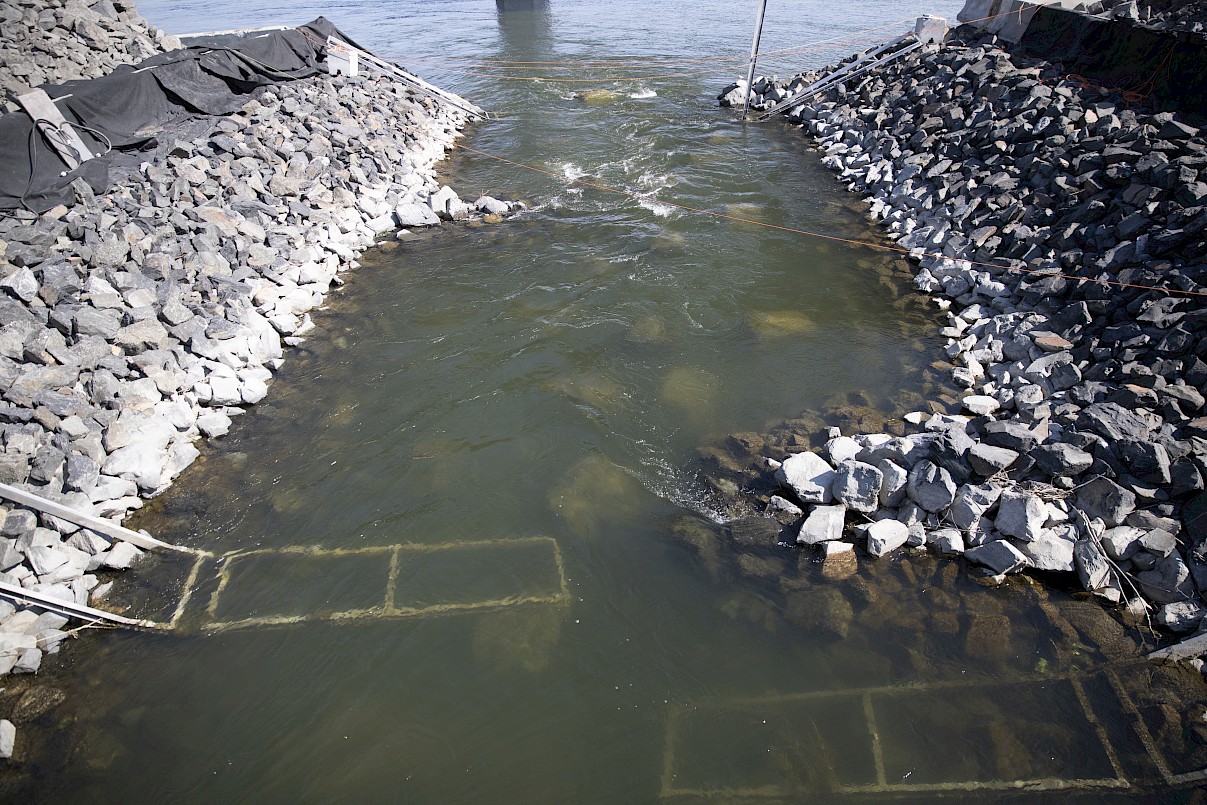
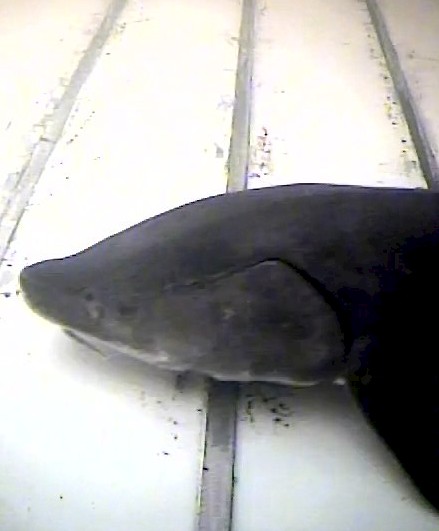
In March 2021, the migratory corridors welcomed their first aquatic visitors. Since the start-up of the counting systems in the two fish migration corridors, JCCBI has captured impressive images of migratory species passing through the area.
 Credit: JCCBI
Migratory corridor.
Our first swimmers to pose for the camera were a magnificent 130-cm lake sturgeon and a 45-cm walleye. All these images and data were analyzed and carefully preserved by the team of biologists to better document the species and number of fish that use the corridors.
Credit: JCCBI
Image captured by underwater infrared cameras.
Great results
JCCBI noted that the developed corridors were already being used even though the temperatures were not optimal, and the river still had ice. This showed how effective the corridor was at minimizing the impact of the jetty during the deconstruction work. What a great example of how the environment can still be protected during construction projects!
Credit: JCCBI
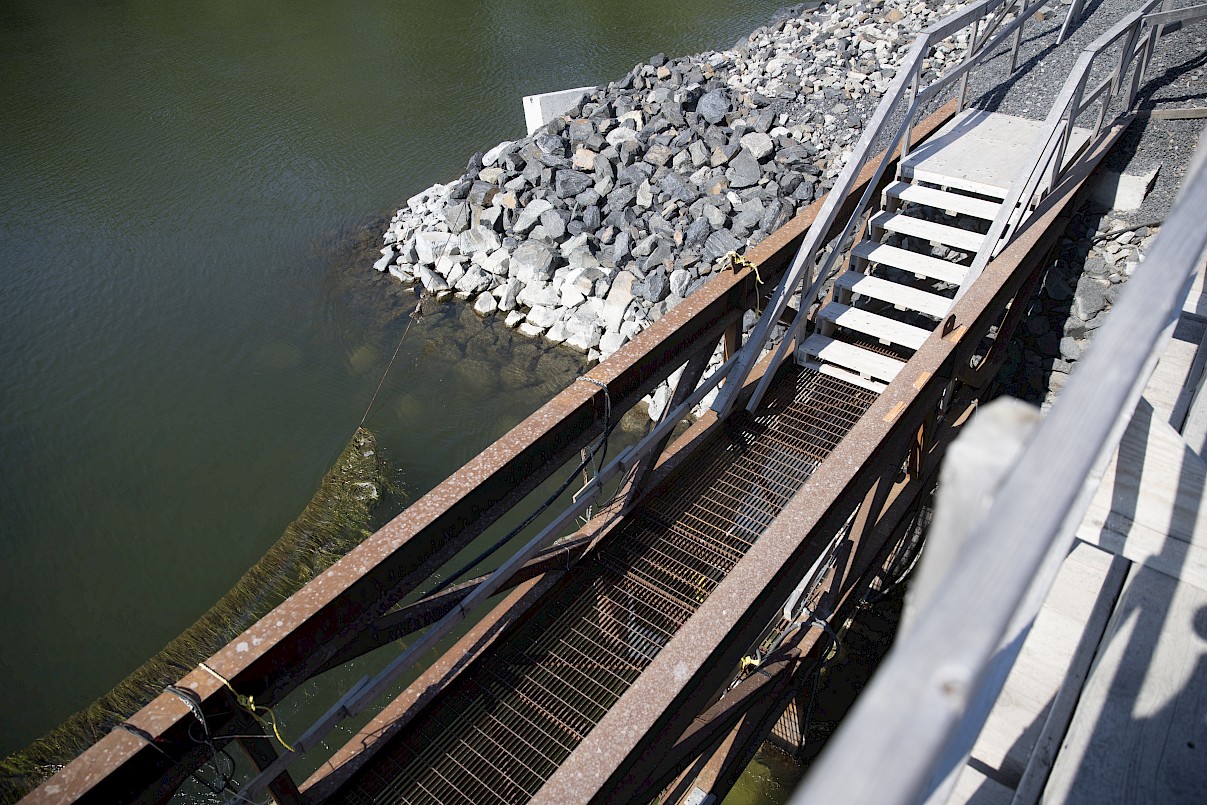
A footbridge to move from one corridor to another.
