


Period : 2015 - 2025
#ByeByeChamplain
BackOn June 28, 2019, the original Champlain Bridge was officially closed to traffic and users switched to the new Samuel De Champlain Bridge.
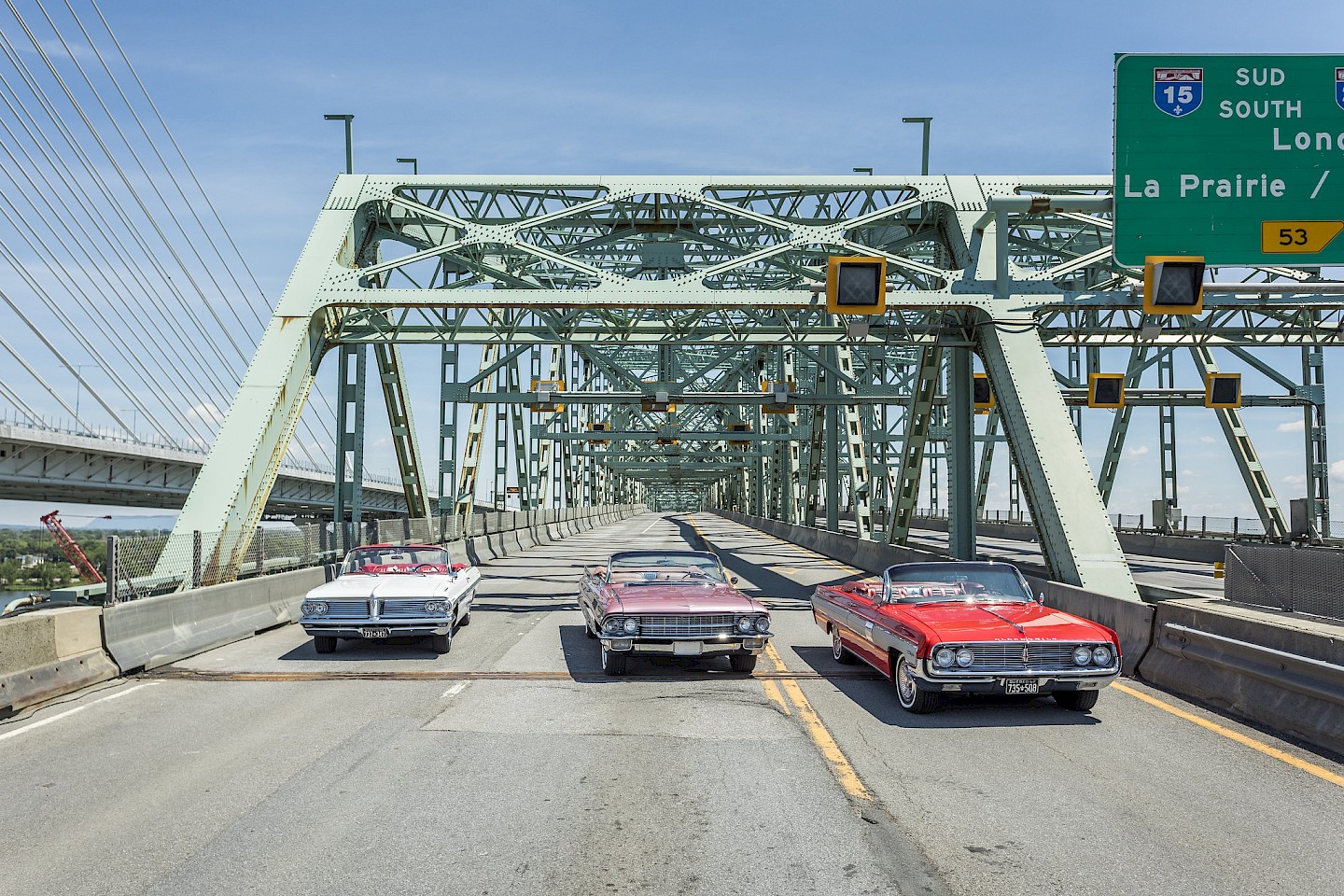
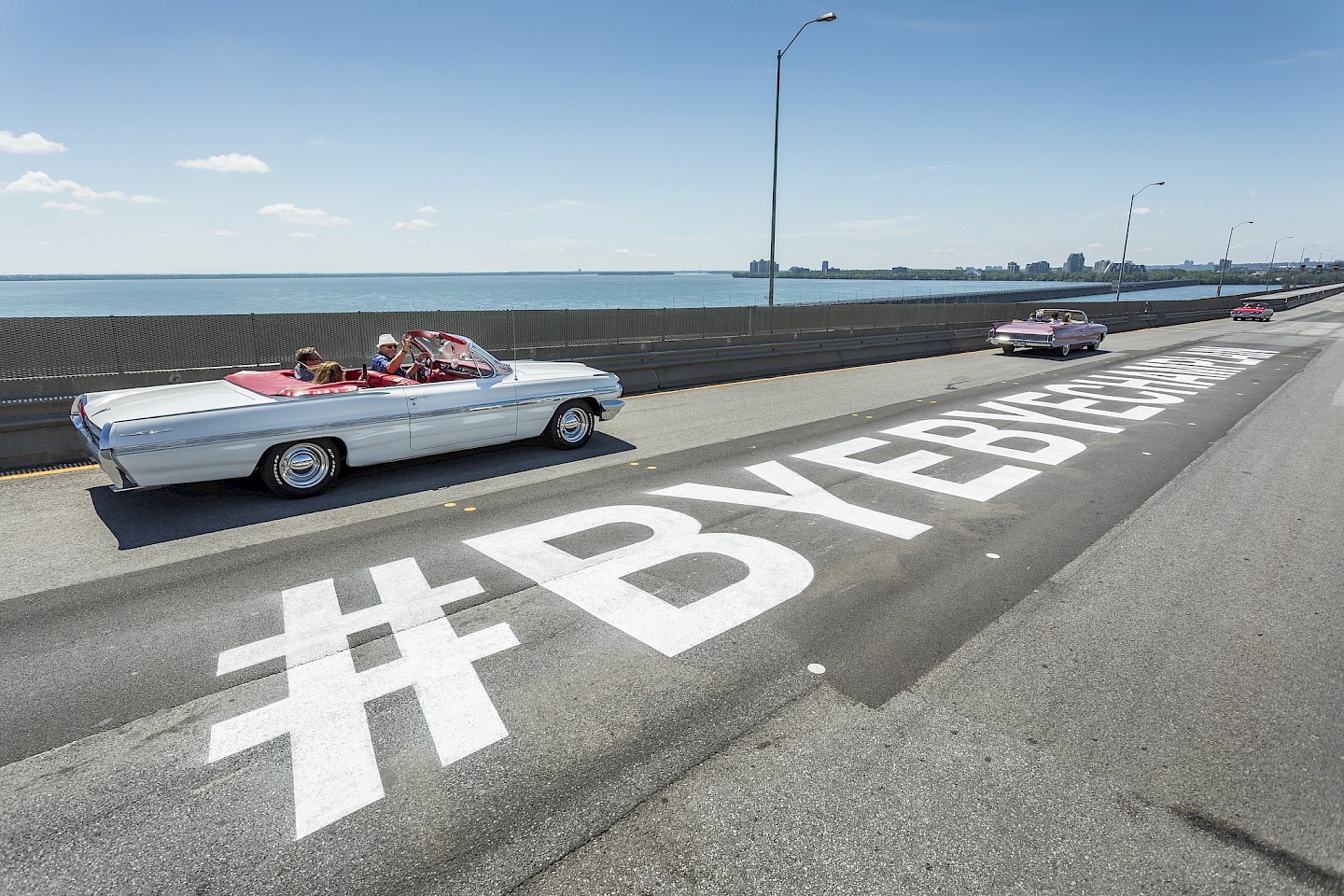
In honour of this historic moment, three vintage cars from 1962 drove over the original Champlain Bridge one last time, commemorating the year the bridge was inaugurated on June 28, 1962.
Credit: JCCBI
Three vintage cars from 1962 drove over the original Champlain Bridge one last time.
JCCBI invited former Dominion Bridge employee Eugene Joseph Diabo to mark this “historic moment”, Mr. Diabo, 88, and his late brother Raymond worked on the bridge’s pillars and steel structure between 1959 and 1961. There were also a few dignitaries in attendance.
Credit: JCCBI
#ByeByeChamplain.

Credit: JCCBI
From left to right: Jean-François Parenteau, Mayor of the Verdun borough, Dominic Lavigne, Senior monitoring engineer at JCCBI, Hamza Azekraoui, Senior project coordinator at JCCBI, Sandra Martel, Chief Executive Officer at JCCBI, Eugene Joseph Diabo, former Dominion Bridge employee, Doreen Assaad, Mayor of Brossard and Paul T. Kefalas, the chair of JCCBI’s Board of Directors.
Guided tour
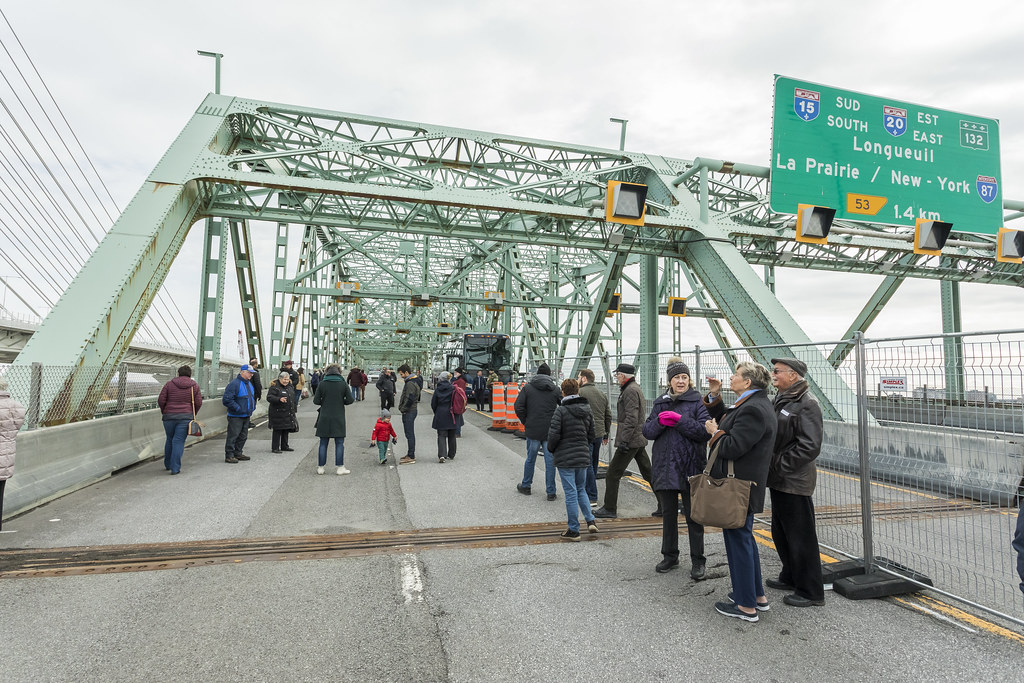
On November 2019, before the deconstruction of the original Champlain Bridge starts, JCCBI offered unique guided tours to the public. These historic 90-minute tours were presented in collaboration with Héritage Montréal. Participants were able to go down onto the bridge to capture never-before-seen images and enjoy a memorable experience!
Credit: JCCBI
Guided tour of the original Champlain Bridge.
Signing of the design-build contract
On March 5, 2020, JCCBI announced the design-build contract for the deconstruction of the original Champlain Bridge to Nouvel Horizon St-Laurent formed by Pomerleau Inc. and Delsan-A.I.M.
The deconstruction work was carried out within a total budget of $400 million allocated for the project, including $225.7 million for the deconstruction component.
Credit: JCCBI
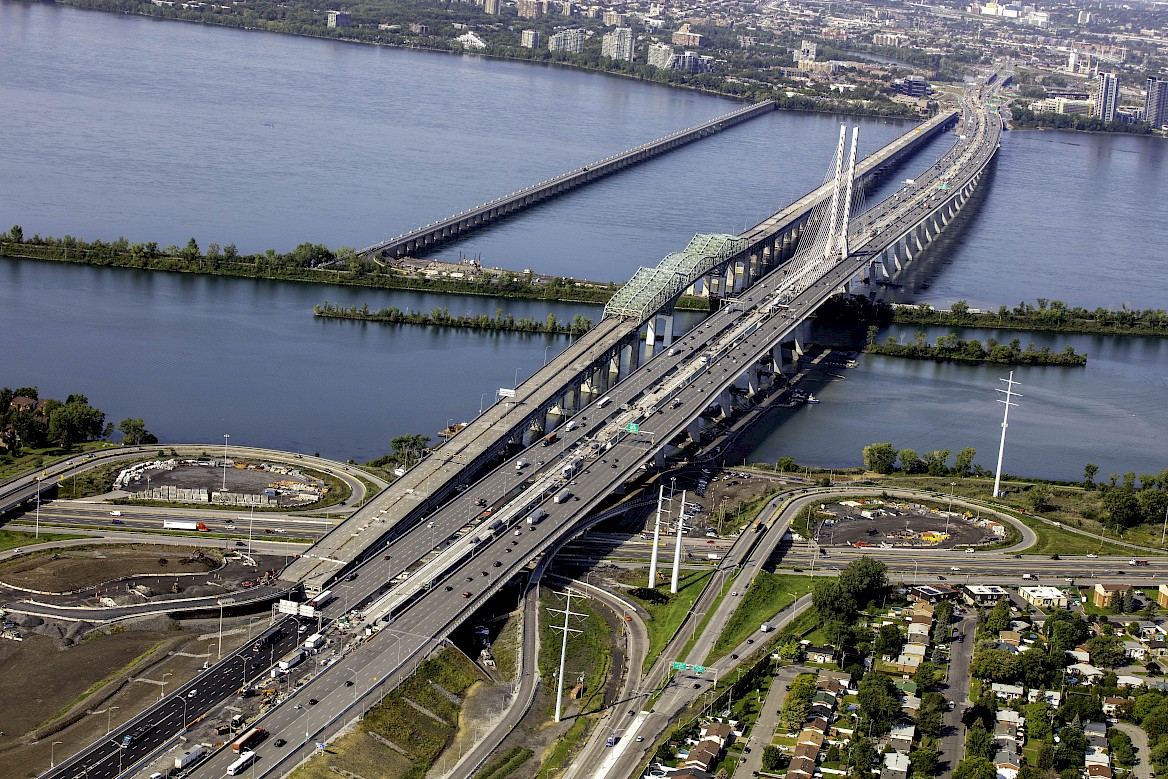
The original Champlain Bridge.
Selection of research and development projects
In March 2020, as part of the original Champlain Bridge deconstruction project, JCCBI selected 12 research and development projects that significantly advanced knowledge about infrastructure performance and sustainability.
This research program was conducted jointly with various Canadian research entities. A total of five Forums were organized to allow researchers to share their research results with the scientific community.
The projects primarily involved aspects and components of the original Champlain Bridge, including concrete elements, metal structures and reinforcement techniques.
Credit: JCCBI
Research and development project.
Launch of the fish habitat and wetland compensation project
The deconstruction of the original Champlain Bridge had an impact on fish habitat and on wetlands throughout the duration of the project. Consequently, compensation projects were implemented to minimize the impact.
Credit : JCCBI
Fish habitat and wetland compensation project.
Credit: JCCBI
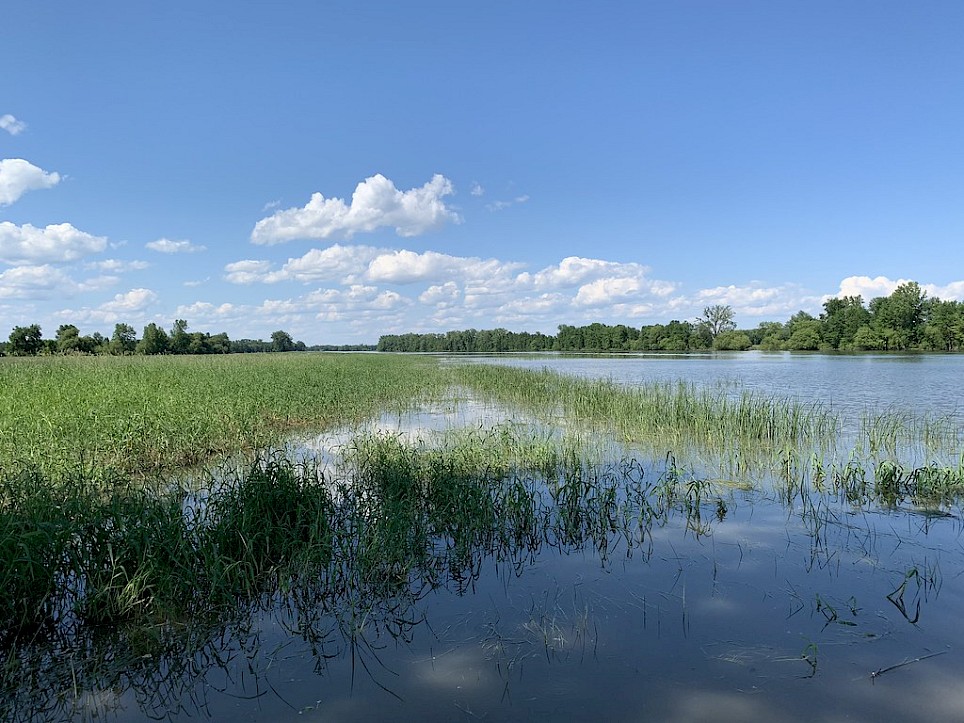
Development of agricultural land.
In July 2020, JCCBI launched its first fish habitat and wetland compensation project in partnership with the Nature Conservancy of Canada (NCC).
This project consisted of developing agricultural land located in Saint-Ignace-de-Loyola along the St. Lawrence River in the Lake Saint-Pierre archipelago to encourage fish spawning and create new habitats to help the diversity of plants and animals, while contributing to the protection of the biodiversity of this magnificent region.
The main objectives of the interventions were:
- To increase the area of yellow perch spawning habitat.
- To improve the free movement of fish in the ditches on either side of the farmland.
- To provide shelter, feeding and nesting areas, and other habitats for different species of birds, amphibians, reptiles and mammals.
Here is a list of the developments carried out on the site:
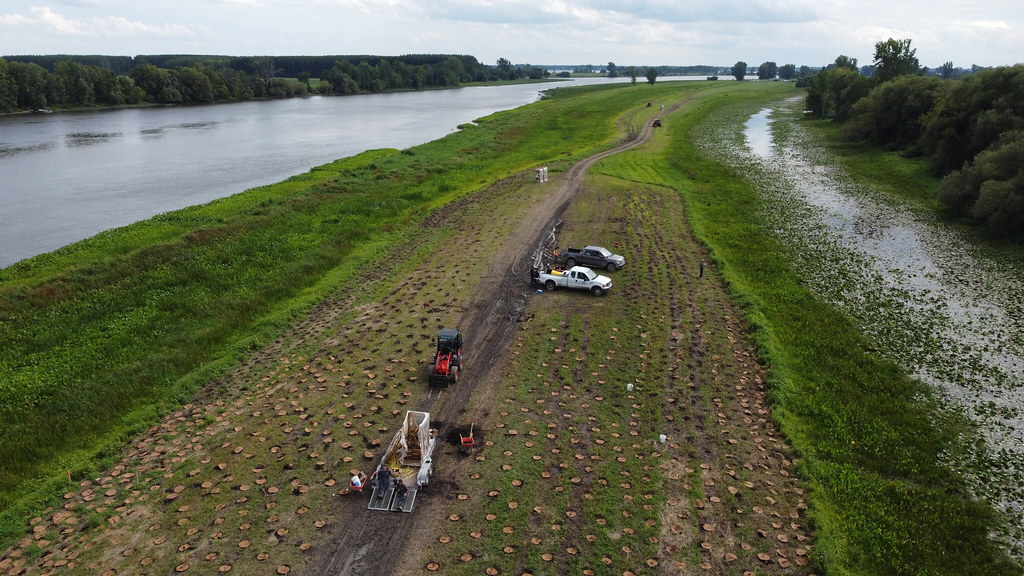
- Nearly 30,000 plants of various plants (shrubs and herbaceous plants) and 300 trees were planted to create a plant cover to stabilize the agricultural plain against erosion while maximizing the benefits for biodiversity.
- Mounds and islands have been created to promote plant diversity and biodiversity.
- Perches, tree trunks and rock piles have been installed to create shelters and habitats suitable for the different animal species that frequent the area.
- Protected bays at different depths have been created to promote fish spawning during different spring floods.
Depending on the proposed developments and the hydraulic conditions of the sector, a gain of approximately 10 hectares of multi-specific habitats has been achieved.
Credit: JCCBI
Tree, shrub, and herbaceous planting activity.
