


Accessible and inspiring living environments
Deconstruction of the original Champlain Bridge freed up seven hectares of land – equivalent of 10 football fields – allowing JCCBI to create the Héritage Champlain Pathway. These areas were developed for public use and were officially opened in 2026.
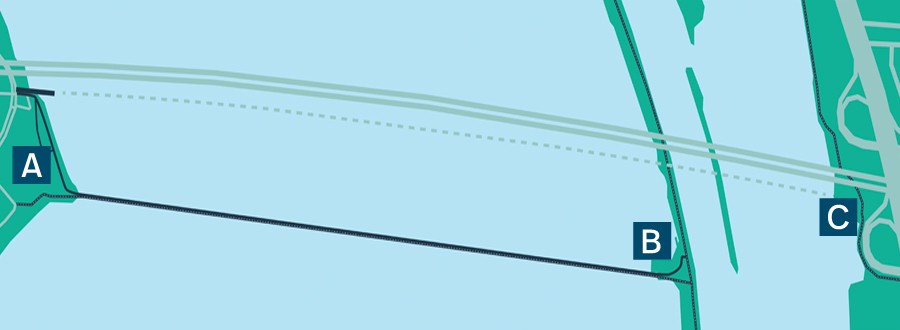
Three separate entrances (A, B and C) provide access to the three sectors along the St. Lawrence River. These are Île des Sœurs (A), St. Lawrence Seaway Dike (B), and Brossard (C) Sectors.
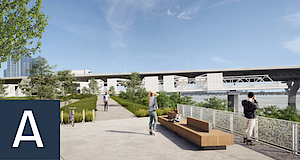
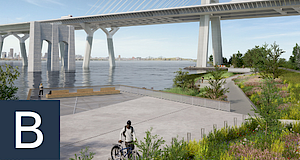
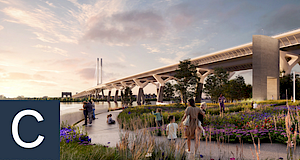
Three sectors make up the Héritage Champlain Pathway which includes:
- a belvedere constructed using materials from the bridge
- piers of the bridge preserved
- inviting rest areas
- urban furniture
- pedestrian paths
- a bicycle path where active mobility users can use the Estacade to reach the Dike
Interpretation Panels
PJCCI is implementing measures to protect and restore species and to conserve Canadian biodiversity on and around the infrastructure under its responsibility, including the Heritage Champlain Pathway. Along the pathway, you will find 12 interpretive panels highlighting species found across the three sectors, along with key points of interest.
PJCCI’s Sustainable Development Strategy contributes to 6 of the 17 goals of the Federal Sustainable Development Strategy. The latter is aligned with the 17 Sustainable Development Goals of the United Nations (UN). The UN’s 15th goal focuses on life on land.
Biodiversity
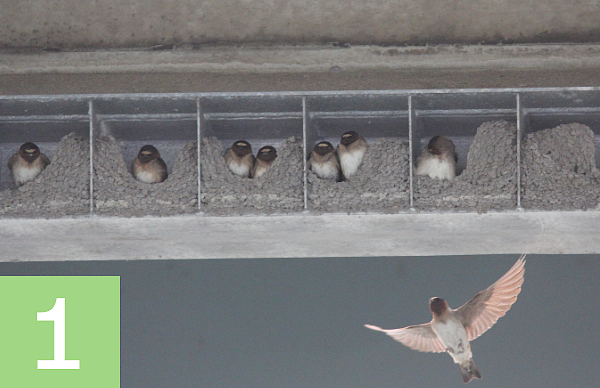
It is protected by the Migratory Birds Convention Act, 1994.
The cliff swallow lives in colonies, in nests made of mud pellets, and hunts insects in mid-air.
To preserve it, JCCBI installed nesting beams under the Estacade structure, which is now home to the largest colony of cliff swallows in Québec. JCCBI monitors the population on all the structures for which it is responsible on an annual basis.
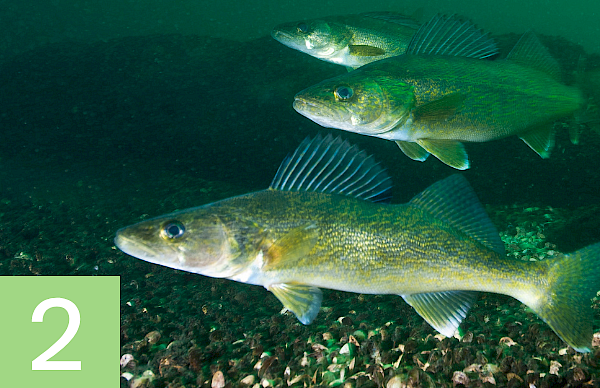
The Fisheries Act protects the biodiversity of this ecosystem by regulating the human activities that could affect it.
The St. Lawrence River is home to many aquatic species, including the lake sturgeon, yellow walleye, and American eel. To maintain the integrity of this natural treasure, JCCBI preserves its banks and several fish habitats, such as feeding areas, spawning grounds and nursery sites. The habitats total some 120,000 m² in the original Champlain Bridge area alone.
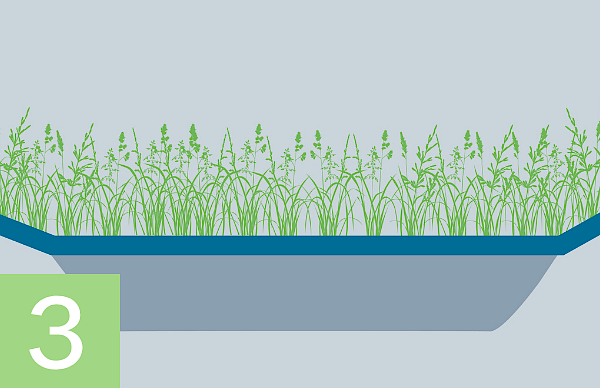
A portion of the water is also returned to the atmosphere through evaporation and plant transpiration.
As part of its climate change resilience plan, JCCBI uses bioretention basins designed to capture, retain, and filter rainwater during heavy rainfall events.
The plants chosen for this site are moisture-tolerant native species. They absorb water and help decontaminate the soil through their roots. The substrate selected for the basin promotes effective water infiltration while creating a favourable environment for plants growth.
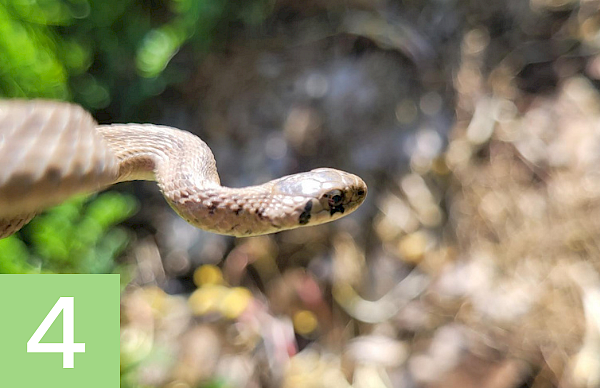
They are listed as an endangered species, particularly due to their habitat being destroyed by urbanization.
Brown snakes are one of eight species of garter snakes in Quebec. They are only found in the Montreal area. Small and fangless, they are completely harmless.
To protect these snakes, JCCBI installed specially designed shelters, as well as set up corridors to keep them from being run over while moving around.
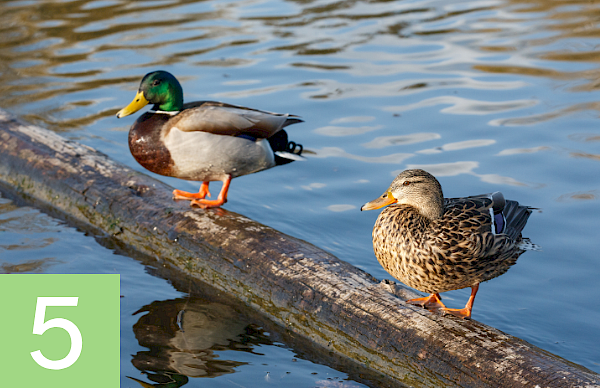
JCCBI applies several mitigation measures to avoid disturbing migratory birds during their nesting period.
Every spring, thousands of migratory birds such as geese, ducks and swallows return to nest in Quebec. Since 1916, Canada and the United States have joined forces by adopting the Migratory Birds Convention, which was implemented by The Migratory Birds Convention Act, 1994. This Act Protects the Birds, eggs and nests of 72 species essential to our ecosystems.
Landmarks
The development of these three sites leaves a legacy for the community, provides exceptional access along the St. Lawrence River, and preserves components of the original Champlain Bridge to commemorate its place in the history of Greater Montreal.
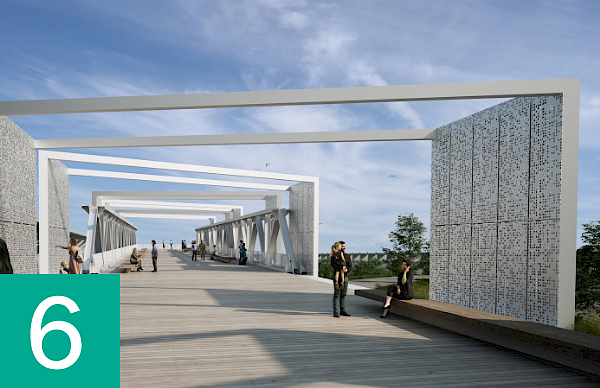
54-metre-long lookout built on two former bridge piers.
Located near La Riveraine multipurpose path and the Réseau express métropolitain (REM), the belvedere extends towards the horizon as a reminder of the position of the original Champlain Bridge. It is lined up with the illuminated pier in the Dike Sector and the commemorative pier in the Brossard Sector. These iconic relics are reminders of the alignment of the original Champlain Bridge.
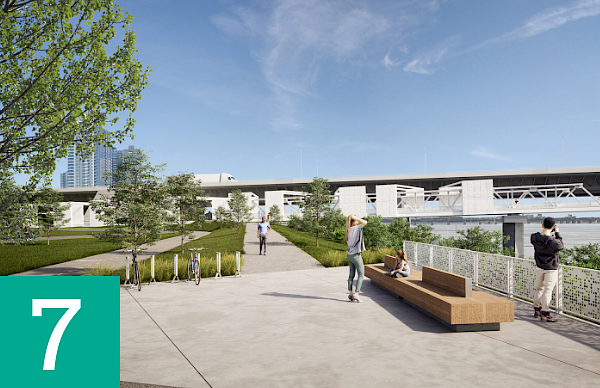
Site feature offering a view of the St. Lawrence River and the relics of the original Champlain Bridge.
Located along the River in the Brossard Sector, active mobility enthusiasts will be able to make a stop before crossing the Samuel-De Champlain Bridge to access the Estacade bike path, which connects to the St. Lawrence Seaway Dike path.
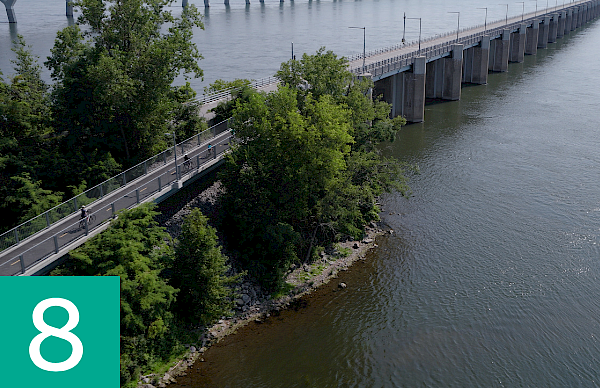
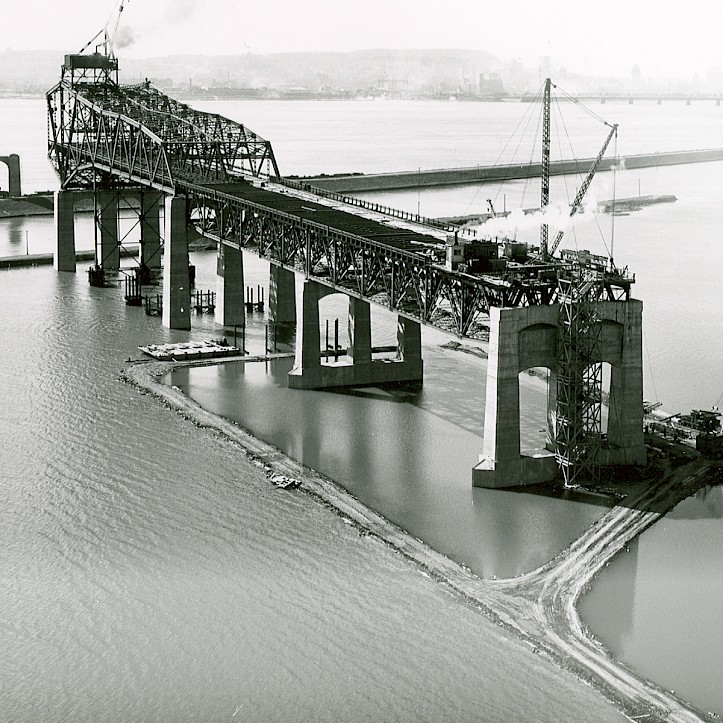
Constructed 300 metres upstream from the original Champlain Bridge in 1964-1965.
The Estacade has featured a bicycle path since 2016. This path forms a key cycling link connecting Île des Sœurs to the St. Lawrence Seaway Dike.

Warm white lighting illuminates the relics of this original Champlain Bridge pier.
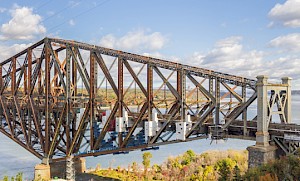
A concrete architectural pier with arches was preserved near the Dike Sector. Before the bridge was deconstructed, the pier served as a transition between the approach span and the main span of the original Champlain Bridge.
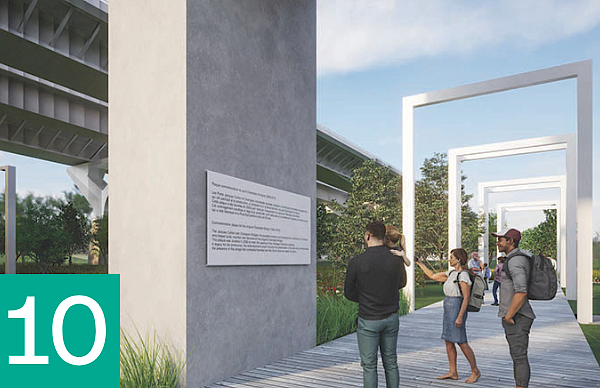
Commemorative plaque for the original Champlain Bridge (1962-2019), installed on the pier in the Brossard Sector.
This plaque was unveiled by JCCBI in 2026 at the official opening of the Héritage Champlain Pathway. It pays tribute to the contribution of all those who participated in the construction, maintenance, and deconstruction of the original Champlain Bridge. This plaque commemorates the structure that linked Montreal and the South Shore for nearly 60 years.
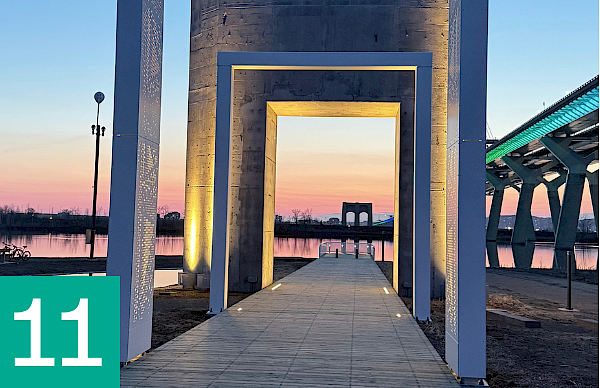
Extensive opening in the pier preserved in the site design as a legacy of the past.
In the Brossard Sector, an imposing commemorative pier marks the position of the original Champlain Bridge, aligned with the illuminated pier in the Dike Sector and the belvedere in the Île des Sœurs Sector.
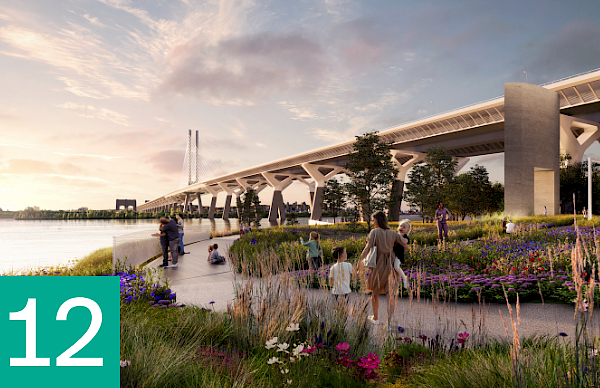
Spectacular view of the illuminated pier and downtown Montreal.
This observation point offers a spectacular panoramic viewpoint of the St. Lawrence River and Montreal. It also offers a vantage point to observe migrating birds and offers views of the Samuel-De Champlain Bridge.
Public Consultations
Public consultations were held in 2019, which determined four guiding principles that shaped the development of the Héritage Champlain Pathway.
- Connectivity: Create areas for active transportation access along the St. Lawrence River.
- Biodiversity: Create spaces that promote diverse wildlife habitat and protect and develop fauna and flora.
- Citizen ownership: Create and direct people to exceptional viewpoints and discovery areas.
- Commemoration: Commemorate the bridge through a linear concept that ties the project together.

Nature, history, and commemoration now come together along the Héritage Champlain Pathway for the benefit of the community.
Any questions?
Select the structure(s) for which you wish to receive in real-time updates about work performed by JCCBI.
To discover
Consult the Live Traffic
• In-progress road closures or
obstructions
• Cameras
• 14-day work schedule
Latest news
Work, inspections and studies…

Île Sainte-Hélène Pavilion:…

